
Improve inventory accuracy, order flow and dispatch reliability without adding unnecessary complexity.
Design the flow around the order
Warehouse layouts should support the movement of products from receipt to storage, picking, packing and dispatch. When fast-moving items are positioned far from packing areas or inbound and outbound traffic compete for the same space, small inefficiencies multiply across every order.
Review travel distance, handling steps and congestion points using real order data. Slotting products by movement frequency, size and handling requirement can improve productivity without changing the building.
Make inventory accuracy a daily discipline
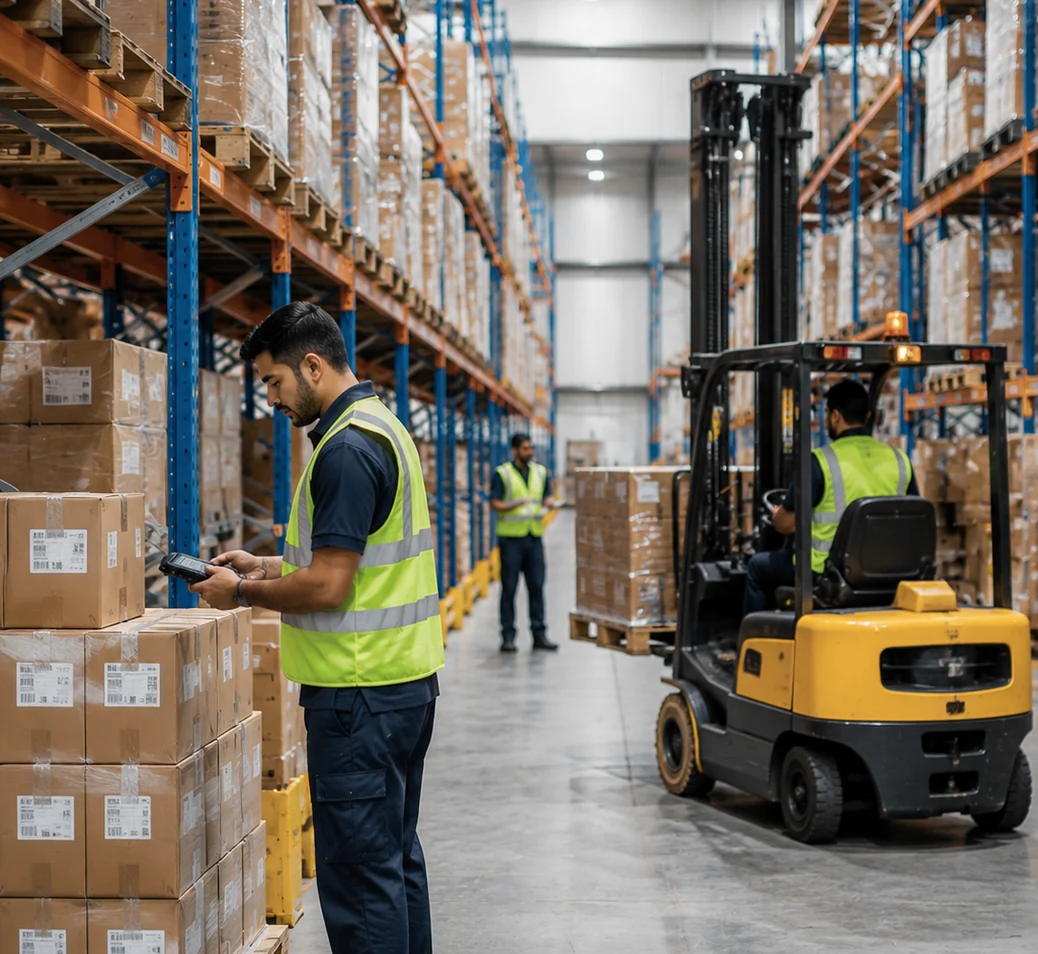
Customer promises depend on the stock figure being correct. Cycle counting, controlled adjustments and clear exception codes help teams find errors before they affect orders.
Scanning and warehouse systems can improve traceability, but process discipline remains essential. Each movement should have an owner, a defined transaction and a clear physical location.
“The best warehouse process is the one that makes the correct action easy to repeat on every shift.”
SafeTrans Freight Desk
Balance speed with quality control
Faster picking is valuable only when the correct item reaches the customer in good condition. Packing checks, label validation and dispatch staging should be designed into the workflow rather than added after errors occur.
Performance measures should include accuracy, damage, on-time dispatch and order cycle time. A balanced scorecard prevents the operation from improving one metric while creating problems elsewhere.
Key Takeaways
- Use order data to improve slotting and flow.
- Treat stock accuracy as an everyday process.
- Measure quality and on-time dispatch together.